
Tourism in Portugal
Portugal is a tourist destination with diverse characteristics, ranging from the coastline and beaches to mountain areas, as well as historical, cultural, and gastronomic heritage. This diversity allows the country to attract different types of tourists throughout the year, spread across various regions each with its own identity.
Main Tourist Regions
Northern Region
The Northern region combines urban, cultural, and wine tourism.
The city of Porto, classified as a World Heritage Site, is one of the fastest-growing tourist destinations in Portugal over the last two decades.
Associated with this region is the Douro, internationally recognized for its wine production and terraced landscape. This area also includes destinations such as Guimarães, Braga, and the northern coast, with beaches like those of Viana do Castelo and Póvoa de Varzim.
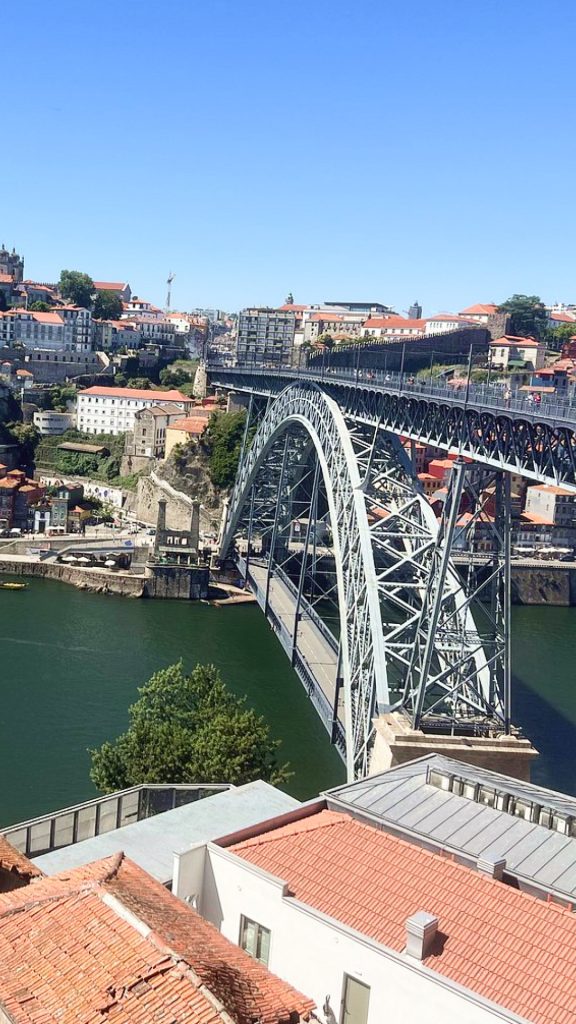
Among the main tourist attractions are the Ribeira district of Porto, the Lello Bookstore, the Clérigos Tower, the Port Wine cellars in Vila Nova de Gaia, and the Dom Luís I Bridge.
In the Douro, the São Leonardo da Galafura Viewpoint and boat trips along the river stand out.
Guimarães, often referred to as the “birthplace of the nation,” is notable for its medieval castle and historic center.
Central Region
The Central Region is characterized by a great diversity of landscapes, from the Serra da Estrela, the highest mountain range in mainland Portugal, to the coast of Aveiro and Figueira da Foz.
It is also a region of historical importance, including cities such as Coimbra, with its university classified as a World Heritage Site, and Óbidos, known for its walled historic center.
This region also includes religious tourism destinations, notably the Sanctuary of Fátima, one of the most visited pilgrimage sites in Europe.
Other relevant tourist attractions include the University of Coimbra and the Joanina Library, the walled historic center of Óbidos, the Batalha Monastery, the Alcobaça Monastery, and the Serra da Estrela, sought out both in summer for hiking and in winter for snow sports.
Types of Tourism in Portugal
Beyond regional divisions, tourism in Portugal can also be classified by type. Sun-and-beach tourism remains the most representative in terms of volume, concentrated mainly in the Algarve and along the western coast.
Cultural and urban tourism has grown significantly, driven by international interest in cities like Lisbon and Porto.
Wine tourism has also gained relevance, linked to the country’s various designated wine regions.
Other important types include nature and adventure tourism, religious tourism, golf tourism, and health and wellness tourism, the latter mainly associated with thermal spas.
Gastronomy
Gastronomy is one of the most valued elements for visitors to Portugal, with dishes and products that vary by region.
Codfish (bacalhau) is considered the most representative product of Portuguese cuisine, with popular tradition holding that there are hundreds of different ways to prepare it. Other characteristic dishes include francesinha, typical of Porto, cozido à portuguesa (Portuguese stew), octopus “à lagareiro” style, grilled sardines, and Bairrada-style roast suckling pig.
In terms of sweets, the pastel de nata (custard tart) stands out as one of the most internationally recognized gastronomic icons today.
As for beverages, in addition to the regional wines already mentioned, ginjinha—a liqueur typical especially of Lisbon and Óbidos—and coffee, whose consumption is part of daily Portuguese habits, are also notable.
Typically Portuguese Cultural Elements
Beyond gastronomy, there are several cultural elements associated with Portuguese identity that are part of the tourist experience.
Fado, a musical genre originating in Lisbon and recognized by UNESCO as Intangible Cultural Heritage of Humanity, is one of the cultural symbols most associated with the country. Fado performances can be seen especially in Lisbon and Coimbra, though the styles differ between the two cities.
Azulejo (decorative tilework) is another characteristic element, present in the decoration of buildings, churches, and train stations throughout the country, with São Bento Station in Porto and the National Palace of Sintra frequently cited as examples.
Popular festivals, especially the Santos Populares (Popular Saints) celebrations in Lisbon and Porto, are also an important part of the tourist calendar, associated with music, dance, and street food.
Other elements associated with Portuguese culture include regional crafts, such as Barcelos pottery and Viana do Castelo embroidery.
Domestic tourism in Portugal is characterized by the diversity of its regions and types of offerings, allowing the country to position itself as a destination for sun-and-beach tourism as well as cultural, nature, and wine tourism. This diversity, combined with a mild climate and rich historical and cultural heritage, has contributed to the sustained growth of the sector in recent decades.
Tourism in Portugal
Portugal is a tourist destination with diverse characteristics, ranging from the coastline and beaches to mountain areas, as well as historical, cultural, and gastronomic heritage. This diversity allows the country to attract different types of tourists throughout the year, spread across various regions each with its own identity.
Main Tourist Regions
Northern Region
The Northern region combines urban, cultural, and wine tourism. The city of Porto, classified as a World Heritage Site, is one of the fastest-growing tourist destinations in Portugal over the last two decades.
Associated with this region is the Douro, internationally recognized for its wine production and terraced landscape.
This area also includes destinations such as Guimarães, Braga, and the northern coast, with beaches like those of Viana do Castelo and Póvoa de Varzim.
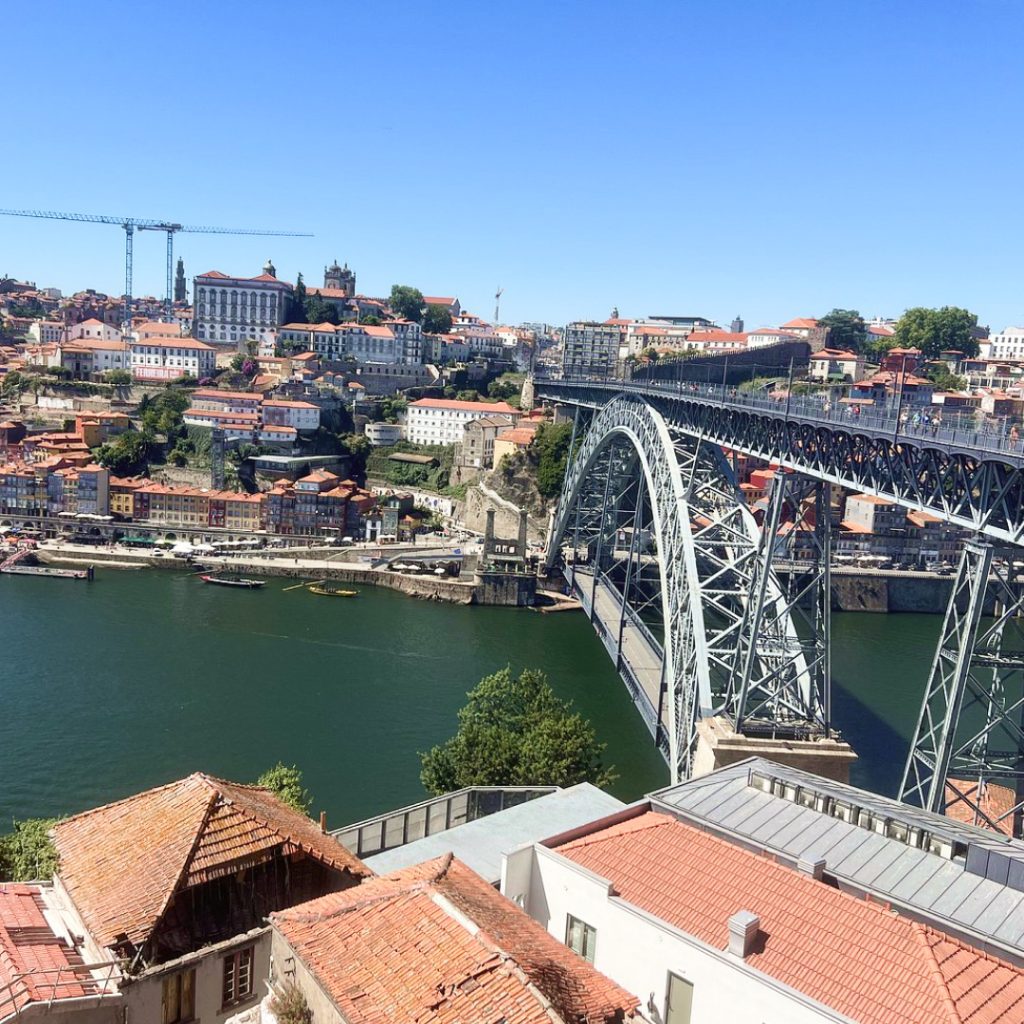
Among the main tourist attractions are the Ribeira district of Porto, the Lello Bookstore, the Clérigos Tower, the Port Wine cellars in Vila Nova de Gaia, and the Dom Luís I Bridge.
In the Douro, the São Leonardo da Galafura Viewpoint and boat trips along the river stand out.
Guimarães, often referred to as the “birthplace of the nation,” is notable for its medieval castle and historic center.
Central Region
The Central Region is characterized by a great diversity of landscapes, from the Serra da Estrela, the highest mountain range in mainland Portugal, to the coast of Aveiro and Figueira da Foz.
It is also a region of historical importance, including cities such as Coimbra, with its university classified as a World Heritage Site, and Óbidos, known for its walled historic center.
This region also includes religious tourism destinations, notably the Sanctuary of Fátima, one of the most visited pilgrimage sites in Europe.
Other relevant tourist attractions include the University of Coimbra and the Joanina Library, the walled historic center of Óbidos, the Batalha Monastery, the Alcobaça Monastery, and the Serra da Estrela, sought out both in summer for hiking and in winter for snow sports.
Types of Tourism in Portugal
Beyond regional divisions, tourism in Portugal can also be classified by type. Sun-and-beach tourism remains the most representative in terms of volume, concentrated mainly in the Algarve and along the western coast.
Cultural and urban tourism has grown significantly, driven by international interest in cities like Lisbon and Porto.
Wine tourism has also gained relevance, linked to the country’s various designated wine regions.
Other important types include nature and adventure tourism, religious tourism, golf tourism, and health and wellness tourism, the latter mainly associated with thermal spas.
Gastronomy
Gastronomy is one of the most valued elements for visitors to Portugal, with dishes and products that vary by region.
Codfish (bacalhau) is considered the most representative product of Portuguese cuisine, with popular tradition holding that there are hundreds of different ways to prepare it.
Other characteristic dishes include francesinha, typical of Porto, cozido à portuguesa (Portuguese stew), octopus “à lagareiro” style, grilled sardines, and Bairrada-style roast suckling pig.
In terms of sweets, the pastel de nata (custard tart) stands out as one of the most internationally recognized gastronomic icons today.
As for beverages, in addition to the regional wines already mentioned, ginjinha—a liqueur typical especially of Lisbon and Óbidos—and coffee, whose consumption is part of daily Portuguese habits, are also notable.
Typically Portuguese Cultural Elements
Beyond gastronomy, there are several cultural elements associated with Portuguese identity that are part of the tourist experience.
Fado, a musical genre originating in Lisbon and recognized by UNESCO as Intangible Cultural Heritage of Humanity, is one of the cultural symbols most associated with the country. Fado performances can be seen especially in Lisbon and Coimbra, though the styles differ between the two cities.
Azulejo (decorative tilework) is another characteristic element, present in the decoration of buildings, churches, and train stations throughout the country, with São Bento Station in Porto and the National Palace of Sintra frequently cited as examples.
Popular festivals, especially the Santos Populares (Popular Saints) celebrations in Lisbon and Porto, are also an important part of the tourist calendar, associated with music, dance, and street food.
Other elements associated with Portuguese culture include regional crafts, such as Barcelos pottery and Viana do Castelo embroidery.
Domestic tourism in Portugal is characterized by the diversity of its regions and types of offerings, allowing the country to position itself as a destination for sun-and-beach tourism as well as cultural, nature, and wine tourism. This diversity, combined with a mild climate and rich historical and cultural heritage, has contributed to the sustained growth of the sector in recent decades.
PHONE (PORTUGAL)
Call cost to the Portugal Mobile Network
RNAAT Nº 715/2025
Design and Development IESolutions